
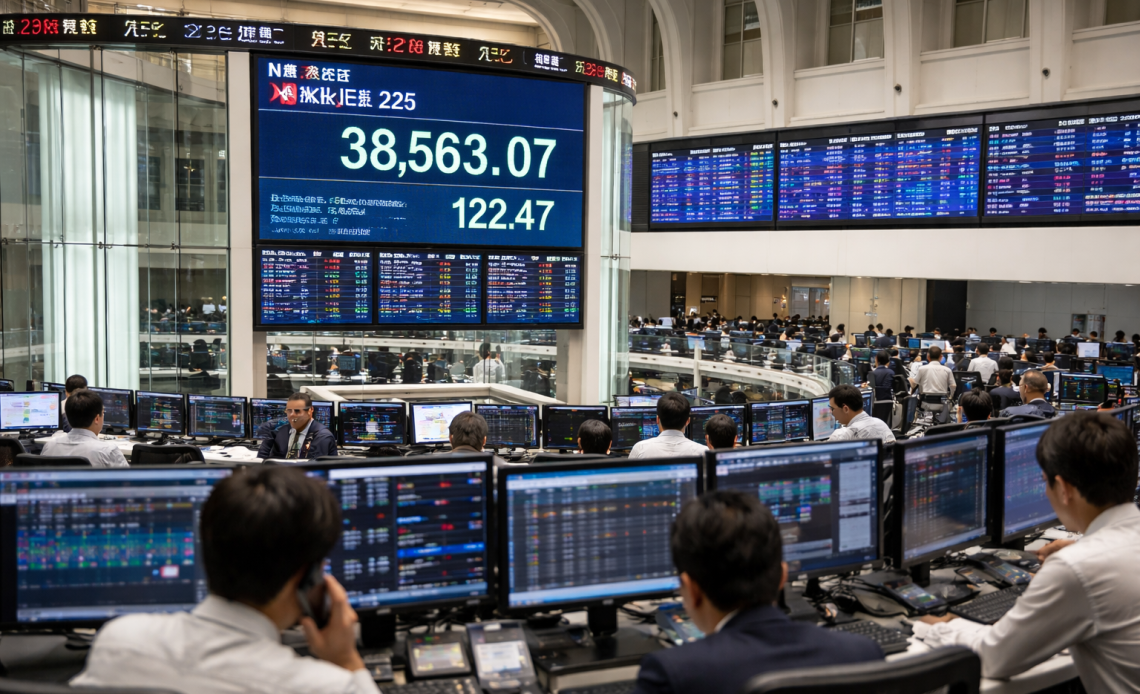
The Nikkei 225 Index remained under pressure in a technical correction as traders observed the ongoing developments in the Middle East. It also retreated after the latest Japanese consumer inflation and PMI report.
Japan stocks pressured as Iran war continues
The Nikkei 225 Index remains in a correction despite the surge in American equities on Monday, when the Dow Jones and Nasdaq 100 indices rose by over 600 and 300 points.
US equities jumped after Donald Trump did a TACO, by announcing that his administration was in talks with Iran. As a result, he decided to stop the planned bombing of Iran’s energy infrastructure.
However, the reality is that Iran has rejected these claims and maintained that the Strait of Hormuz was still closed to enemy countries. Trump decided to de-escalate after talking with regional governments as Iran had threatened to bomb their infrastructure and desalination plants.
Therefore, there is a likelihood that the Iran war will continue for a while as the latter aims to prevent future attacks. Iran also insists that it will need to be paid by the United States and Israel for the description.
These fears explain why energy prices have started rising again. Brent, the benchmark asset, rose to $100, while the West Texas Intermediate (WTI) rose to $92.
Japan is one of the most exposed countries as it imports most of its energy from the Middle East.
Japan inflation and PMI data
The Nikkei 225 Index also retreated after the latest Japanese inflation and PMI data. According to S&P Global, the manufacturing PMI dropped from 53.0 in February to 51.4 in March.
Similarly, the services PMI dropped from 53.8 to 52.8, while the composite figure dropped from 53.90 to 52.50. These numbers mean that business activity in the country has started to moderate amid the ongoing Iran war.
Another report showed that Japan’s inflation moderated before the war started. The headline inflation dropped from 1.5% to 1.3%, while the core CPI dropped from 2% to 1.6%.
While the inflation trend is positive, chances are that it will rebound in the coming months because of the rising energy prices in the country. As a result, the Bank of Japan may decide to hike interest rates later this year. This explains why Japan’s bond yields have continued rising this month m
The top gainers in the Nikkei 225 Index were companies like Sumitomo Dainippon, Citizen Holdings, Mitsui, Hoya, Resona Holdings, and Mitsubishi Chemicals.
On the other hand, some top companies were in the red. Nippon Sheet Glass stock dropped by nearly 10%, while Japan Steel Works, Kawasaki, Konami, and Mitsubishi Heavy dropped by over 3%.
Nikkei 225 Index technical analysis
Nikkei Index chart | Source: TradingView
The daily timeframe chart shows that the Nikkei 225 Index has retreated in the past few weeks, moving from a high of ¥59,330 in February to the current ¥51,90.
It has dropped below the ascending trendline that links the lowest swings since August last year. It also retested that trendline, confirming the break-and-retest pattern.
The index has dropped below the 50-day Exponential Moving Average (EMA), while the MACD indicator has moved below the zero line.
Therefore, the index will likely continue falling as sellers target the key support level at ¥50,000. This view will be confirmed if it drops below the key support level at ¥51,837.
The post Here’s why the Nikkei 225 Index is at risk of falling to ¥50,000 appeared first on Invezz